subjective / objective dialectics

Topic Two (b)
Theoretical and Methodological Issues
in Cultural psychology
I - Cultural Psychology
: Development of the Perspective (from history)Giovanni Battista Vico (1668-1704): Four Types of Knowledge
Social Evolution
- stages of psychologicalGottfried Herder (1784-1791)
Wrote a "History of human soul, in periods and peoples"
Peoples (Völker) were characterized by shared language and historical traditions
Völkgeist - the "personality" or character of a group of people
populism, expressionism, pluralism (Berlin, 1976).
Adolf Bastian (1826-1905)
Elementargedanken (Elementary ideas)Basic ideas that are common to all peoples - foreshadows archetypes.
Psychic Unity of all people, common cultural traits developed
independently.
A vocal anti-racist, various in myths and ideas are due to material
conditions
von Humboldt (1830)
- Credited with having "founded" the tradition ofVölkerpsychologie. Studied the "mentality" of people through a linguistic comparison.
Lazarus & Steinthal (1860)
Zeitschrift fur Völkerpsychologie und Sprachwissenschaft
Journal of Folk-Psychology and Philology
Völkerpsychologie is "the science of the Völkgeist, that is the
theory of the elements and laws of mental life of peoples."
Two General Tasks or Views:
1) Folk-History - historical study of mankind as a whole to understand the general laws of the development of mind;
2) Psychological Ethnology - study of the specific mentalities of different peoples to understand the factors responsible for its manifestation.
Wilhelm Wundt (1832-1920)
-Gathered his own ethnographic data which was published as
Völkerpsychologie in ten volumes over two decades.
-Focused on describing the thought, belief and action of mankind.
-Divided all human culture into four stages or ages of
Primitive Age >Totemic Age > Age of Heroes and Gods ->Development
to Humanity
Ages of Cultural Evolution
These ages do not denote abilities or mental endowments, rather activities are focused on different objects of the material world and the products of the worlds of community and individual consciousness: art, poetry, myths, customs, languages.
The Russian Cultural-Historical Psychology
Lev Vygotsky (1896-1934)
Leader and developer of "activity theory" which examines consciousness and symbolic understanding as a social process that is distinct from mechanical process.
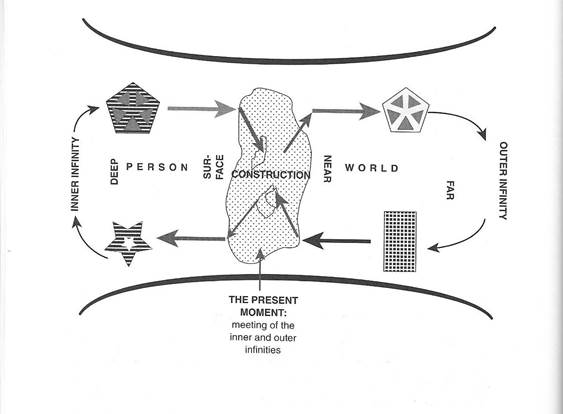
A dialectical process is central where understanding of the whole replaces the extraction of elements from the whole. Fig. 1
Mind (cognition, perception, emotion, self, mental illness, developmental processes, .... all are "imbued with a cultural-historical significance" (Ratner, 2008, p. 8).
Culture mediates our experiences (i.e. a Happy Birthday Cake) with cultural significance.
Historically, the invention of tools brings an end to behavioural development in evolution, being replaced by cultural factors and forces.
Alexander Luria
(1902-1977) - continued tradition of psychology as culture.
Later well known for books: "Mind of a Mnemonist" and "The man with a shattered
world"
for more see Cole (1979).
Aleksei Leontiev (1903-1979) - "The development of higher forms of memory" (1931).
Berry et al., (1992) Cultural psychology is characterised by descriptive studies where:
1) The cultural system is seen as level of analysis, the meaning of behaviour depends upon the rules and customs of a cultural tradition.
2) There is an emphasis on the mutual process of individual and social; dialectics.
3) There is no room for comparative studies since meaning of behaviour depends on cultural context.
Critiques: & challenges
Richard Shweder (1990): Cultural psychology
-Human beings are intentional and actively construct and
re-construct the world into meaningful perspectives. Creating
concepts of self, emotion, values, knowledge, religion, spirits, . . .
-It involves "thinking through" others interpretations
of culture as expressed by and with others.
Carl Ratner (1997):
Cultural Psychology and Qualitative MethodologyCritical of positivism and general / cross-cultural psychology.
Including:
1) Fragmentation (atomism)-including stimuli&responses,
2) Quantification -including qualitative invariance-reduction of qualitative difs to quantities
(assumes qualities are uniform); also stats-means misleading & sig. test unimportant,
3) Operational Definitions - assume overt behaviour
is equivalent with psychological meaning
4) Positive validity (looking for black crows)
not falsification.
Cross-cultural psychology treats culture as a causal variable to be measured (and manipulated?)
Cultural Psychology should involve: recognition of complexity of phenomena that are expressed through extended activities and that mental phenomena have no specific behavioural correlates.
Cultural factors do not simply "influence" psychology, they are psychological" (2008, p.2)
Culture is seen as:
1) a collective product (synthesis) - not reducible individuals or a sum of individuals
2) a constructed world - a creative process
3) artificial (human creation) - not an outgrowth of "natural" mechanisms
4) a new order of life - like Sir Karl Popper's world three - polis or ethos
Methodological Principles for Cultural Psychology:
-Verstehen -Understanding against a historical context only (hermeneutics).
-Interpret behaviour - description of action sequence-that leads to certain outcomes in given historical social contexts.
-Interpret verbal statements and actions and institutions
-Identify situations in which phenomena do & do not occur
(examine the stimuli, presenter & observer relationships
ascertain the quality of phenomena through relationships with other
phenomena).
- the dialectical relationship between activity and psychology is central to cultural psychology.
- social activity involves final causes (telos) - goals and ends to which we collectively move
- personal psychological experience
/ common cultural activity
subjective / objective dialectics
Besseverstehen
(better understanding) is the ultimate goal of cultural psychology where one attempts to "elucidate features, relationships, and dynamics of psychological phenomena that may not appear in subjective experience" (Ratner, 1997, p. 61).
Micheal Cole (1996) Cultural Psychology
Three basic Principles of Cultural Psychology
Cultural psychology involves the deciphering of (subjective) meanings from (objective) artifacts, social institutions and cultural concepts
According to Cole (1996) Artifacts can be:
Primary: objects of everyday significance (Axe, bowl, needle).
Secondary:
representations of those objects in terms of meaning and use
(recipes, traditional beliefs, norms, schemas, scripts, roles)
Tertiary: imaginative works (art, products, and creative processes).
(Ratner ,2008) Fig 2
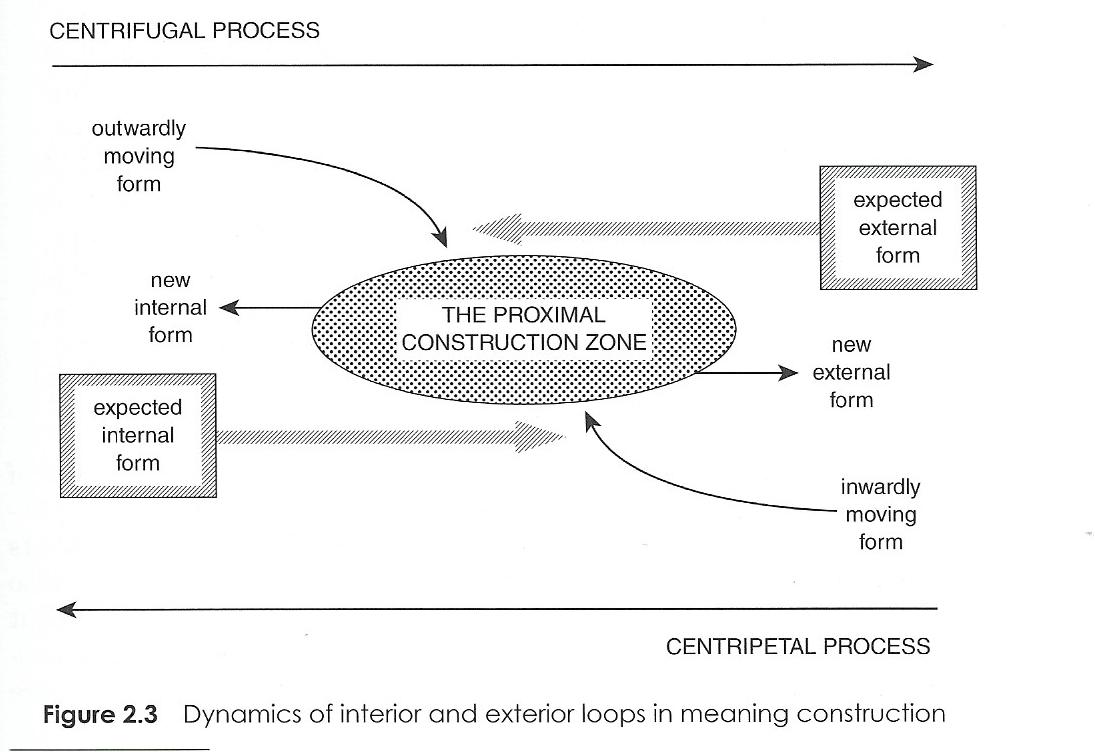
Valsiner's (2014) Invitation to Cultural Psychology draws from the same sources
and offers a critique of Cross-Cultural Psychology 
as well as Stern's Communication Model
Here culture is both internal and external and one must understand meaning making of artifacts and symbols,
including mythologies, as part of the internalization and externalization processes.
(Later see Tonks (2006) Toward a hermeneutical cultural psychology of identity-acculturation)
The "Other" Cultural Psychology (Evolutionary Cultural Psychology)
As described by Tonks (2010; 2018) Drawing from Campbell (1965) and Richarson & Boyd (2005) "Not by genes alone"
Mind is a product of biological and social evolution - Drawing also from Dawkins' notion of "memes."
Examples:
Handbook of Cultural psychology (Kitayama & Cohen, 2007).
Evolution, culture and the human mind (Schaller et al., 2010).
Heine (2012) Cultural psychology -examining self and psychology as being caused by evolutionary processes.
Indigenous Psychologies
Doi ( 1971) - began to examine Japanese concept Amae in psychotherapy
Heelas & Lock (1981) - Examine the self across cultural traditions
Paranjpe (1984) - Draws out the traditional Indian psychology from Upanisads and Vedas
Kim & Berry (1993) - Draw widespread attention in psychology towards indigenous psychologies
Kim, Yang & Huang (2006) - (see your readings)
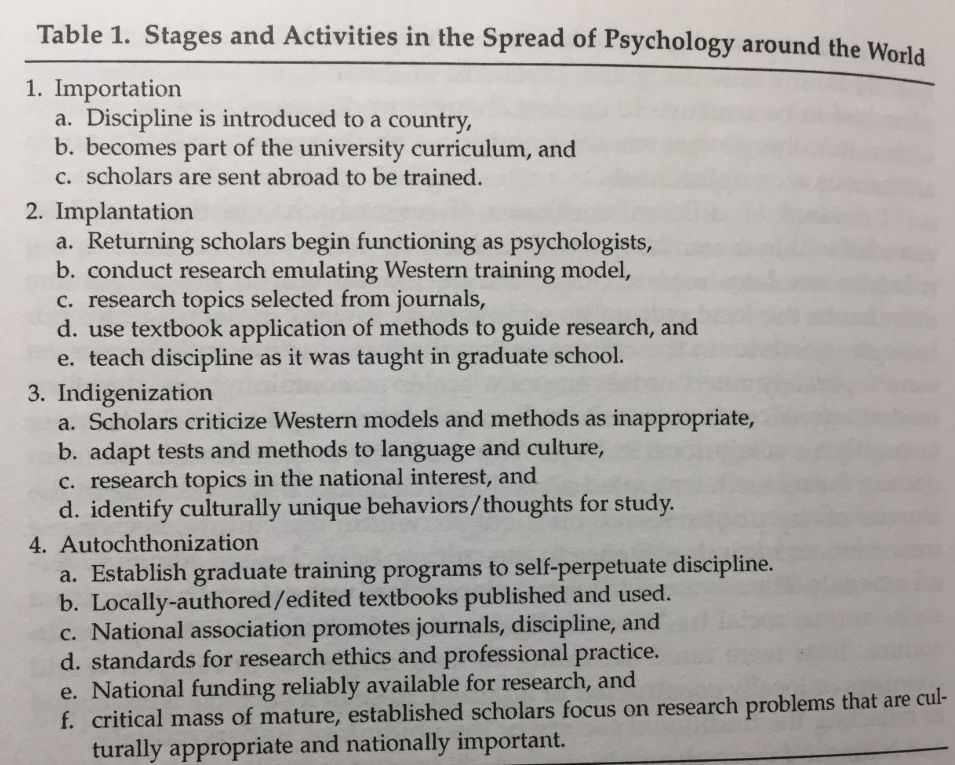
Adair (2006) - Reviews the Indigenization process from importation to autochthonization.
Ratner (2008) advocates for a "macro cultural psychology" to be "used as a foundation for a paradigm" as the most comprehensive and valid of these approaches" (p. vii).
Indigenous Research: Methodologies of Resilience and Adaptation
E.S. Huaman & N.D. Martin (2020)
Theses authors review and build on the work of other recent publications in this area as they
”Revisit understanding of Indigenous research and analyze how its processes
maintain, honour, and shape self-determination and self-development as conceived
and described by Indigenous peoples” (p. 3)
This volume is directed not only at how to teach research skills, but also
“how Indigenous research transforms them” regardless of the academic or scientific discipline.
They set out to show how Indigenous researchers:
“select, use, challenge, critique and transform research methods in ways that create discussion
around how research is actually done with indigenous peoples; and how Indigenous epistemologies
are reconstructing research design entirely” (p. 4)Eg. Natural selection is not the “survival of the fittest, smartest, or strongest” but rather recognizes the Indigenous people’s relationships with their environments and their very own survival takes into account resilience and adaptation. Rejecting the traditional western/European hegemony that threatens “environmental and human sustainability” (p.4)
There is explicit work against the traditional characterizations of Indigenous peoples
and a reclaiming of identities, epistemologies and a power shift to
“identify injustices, reveal strategies for facing problems, and contribute to vison-making for good futures” (p. 5).
There is also a “reclaiming connection with lands, cultural practices, spirituality, and languages” (p. 6)
Rejecting the dominant “top-down” positivist methodologies of privilege,
Indigenous research can turn to the four-oceans or four-corners approach of:
north, south, east & west - representing:
healing, mobilization, transformation and decolonization
The four ocean tides represent:
survival, recovery, development & self-determination
Research by and with Indigenous researchers involves ethics and cultural values,
meaningful relationship building and transparent research design.
While these are general principles, research needs to grounded in local traditions and communities
Indigenous research is dynamic, inclined toward innovation, and seeks to recover, maintain and protect Indigenous knowledges while also “fulfilling obligations to Western scientific methods for academic legitimacy” (p. 8).
Indigenous research works toward self-determination by:
A holistic approach is central recognizing that human beings are ecological being and our “place” cannot be separated from what we do.
“Life systems are comprised of environmental, economic, social, cultural,
linguistic, health, educational, political scientific and technological elements” (p. 9)
There is explicit recognition of the interconnectedness of these elements within Indigenous research ecologies, interest in decolonaity, challenges to European hegemony, and a movement towards:
“multilateral democratization of knowledge production … [that is] invested in inclusive processes of knowledge production that challenge and dismantle authoritarian, oligarchic and elitist knowledge hierarchies” (p. 10)
Back to
Cross-Cultural Psychology