
Diversity
and Pluralism into the future
OR
(You say you
want a Revolution?)
I. Social and
Political Revolutions:
Forms of life
and Counter Cultures
1950's
mainstream "middle-class" life vs. "Beatniks"
1960's
mainstream "middle-class" vs. "Hippies" & "Yippies"
From
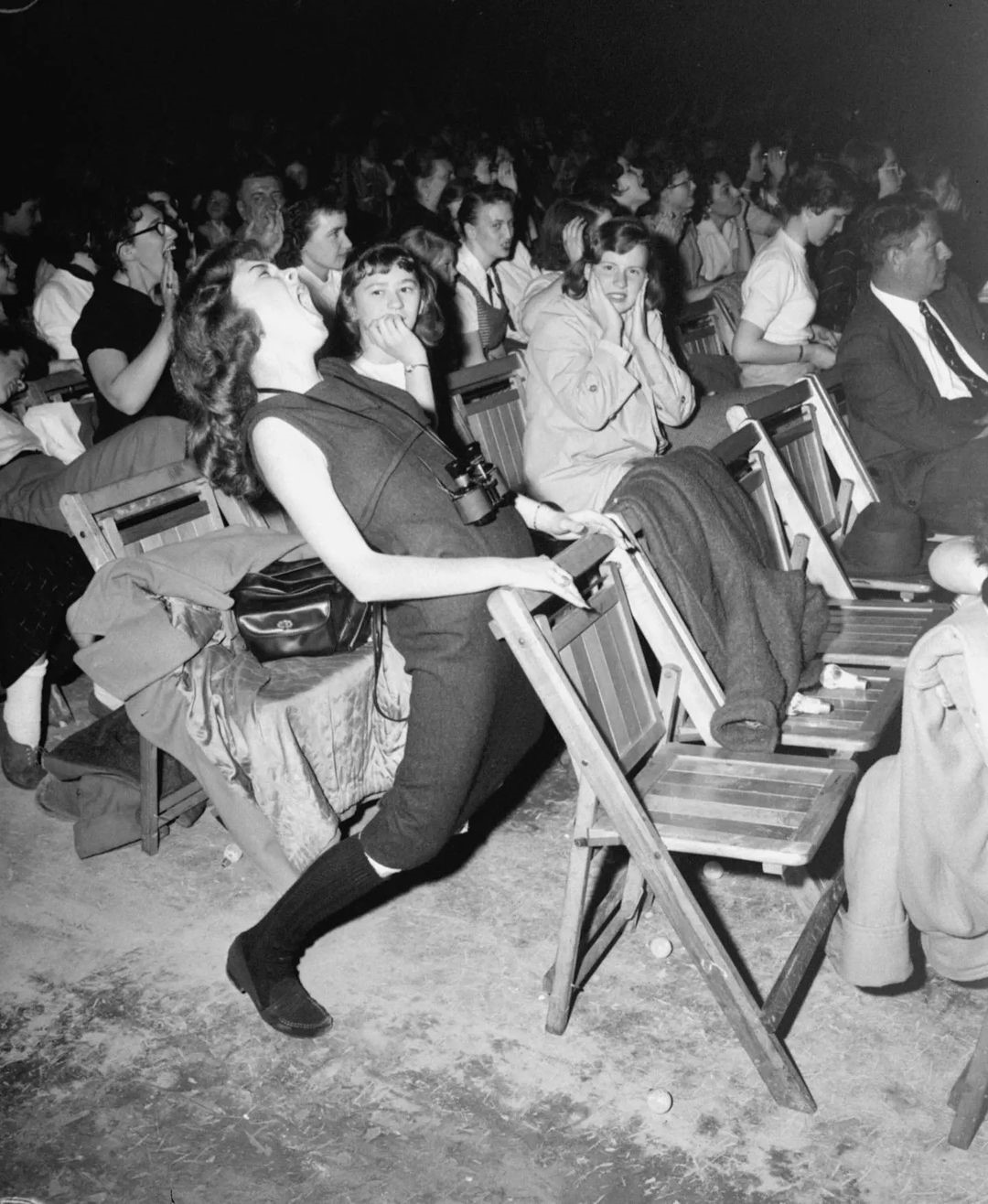
Elvis to the Beatles massive revolutions
in music and popular culture through television and radio
1964
- Ken Kesey & the Electric Kool-aid Acid Test,
the Grateful Dead, Haight-Ashbury, Jefferson Airplane, ...
Sunshine Day Dream -
Renaissance Fairgrounds1972
Youth
and "negative Identity" challenging the identities
given by parents, teachers, & the "establishment"
1967
- Woodstock, Timothy Leary released from Harvard
War in Viet Nam, moon expeditions, assassinations, Canada's Centennial
Leary returns to Harvard - Erikson Story
Jung
became popularized: Archetypes and Mandalas
"Eastern" perspectives: From Alan Watts to Baba Ram Das
Taoism,
Tantric Buddhism, Vedanta, & Zen
Canada and
Quebec separation, Unity or Diversity?
II. Humanistic
Psychology: The Third Force
Challenges to
the determinism of psychoanalysis and behaviorism: Free Will
Made use of
Existential-Phenomenological perspective in understanding the personal
experience of people
|
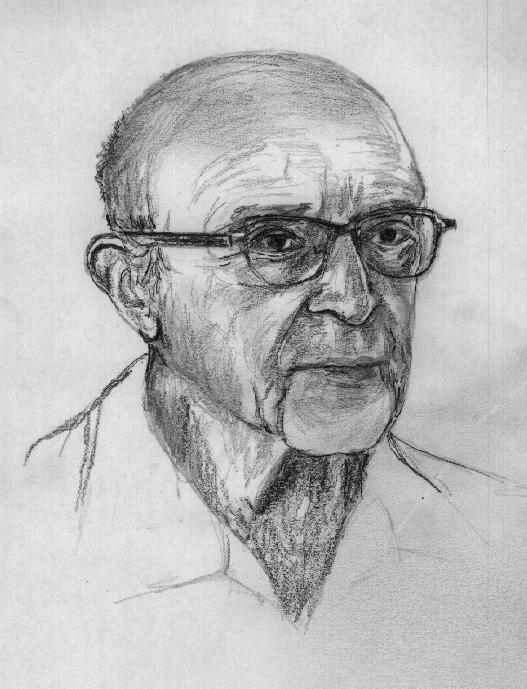
Carl Rogers (1902-1987): Client centred therapy |
Three
modes of knowing:
1) Objective
2) Subjective Personal
3) Subjective 'other' or empathic
1961
- On becoming a person : A "fully functioning" one
Abraham Maslow
(1908-1970): Self Actualization
Hierarchy
of Needs and personal growth towards fulfillment of authenticity and ataraxia or
tranquillity
Peak
experiences and B-values: Truth, Beauty, Wholeness, Effortless, Playfulness,
Uniqueness, Aliveness
These Influences along with others lead to the development of current positive psychology.
Thomas Szasz:
The medical "myth" of mental illness
1952 DSM was developed.
Then grew a critique of the
prescription of major tranquilizers and labeling
where advertising and sample prescriptions abound.
Contemporary Big Pharma - paying doctors to prescribe,
and paying universities to propose and opppose opponents.
"Stakeholder" in DSM5
| III. New
Structuralism: Piaget and "Cognitive" psychology |
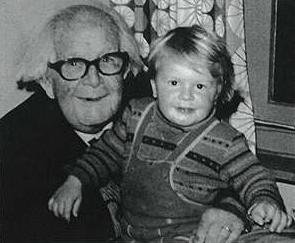 |
Epistemogenesis
:
the epigenesis of knowledge where the knower and the known go through
qualitative changes in schematta using assimilation and accomodation
Sensory
Motor Operations
Concrete Operations
Formal Operations
Lawrence
Kohlberg and stages of moral reasoning
(Heinz)
Pre-Conventional: Ego oriented
Conventional: Social & Rule oriented
Post-Conventional: Principle oriented
Carol Gilligan:
Care based morality
Men typically make use of a disengaged
perspective of reason
Women typically make use of an engaged
perspective of care
IV.
Feminism
and the Womens' Liberation Movement
Sandra Pyke
and Cannie Stark-Adamec (1981): The first ten years
1972
- Six women from York University started an "underground" movement
1975
- CPA Task Force on the Status of Women in Canadian Psychology
1980
- Establishment of SWAP: Section on Women and Psychology
Sex based discrimination in academia: Androcentric bias
Sex role socialization and stereotyping
Achievement and low affiliation
Tension
between familial and career goals
Feminism
and Applied psychology: Documentation of traditional inadequacies and the
development of guidelines for practice and ethical treatment
 |
Meredith
Kimball (1986): Ground-breaking from the underground |
Goal
to eliminate sexist bias: Language, methods, ...
Interdisciplinary
orientation is crucial
Goal
for consciousness raising and political challenge
Early
Feminist scholars:
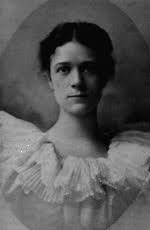 |
Helen Bradford Thompson Wooley (1874-1947): 1903 PhD at Chicago Also a leader in rebutting myths Instrumental in the development of Merrill-Palmer Scales |
|
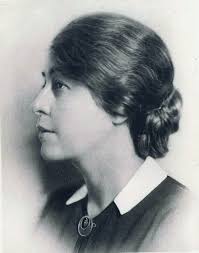
Leta
Stetter Hollingworth (1886-1939): 1916 PhD at Columbia Refuted myths about women, including the decrement of performance during menstruation |
Pioneer
in child psychology: First to use term "gifted"
Mary J. Wright
(1992): Women Ground-breakers in Canadian psychology
Magda Arnold - Expert in Emotions and Mary Salter - Ainsworth on Attachemnt
Meredith
Kimball (1994): Two Traditions of feminist
research
Similarities
tradition:
Maccoby & Jacklin (1974): The psychology
of sex differences
Differences
Tradition:
Karen Horney (1926): Critique of Freud's "Penis Envy"
Nancy
Chodorow (1974): The reproduction of mothering
Carol
Gilligan (1982): In a different voice
contradictions seen through their dialectical relationship
Feminism and
the philosophy of science: New Hermeneutics
Sandra
Harding (1986): Empiricism, standpoint & post-modernism
| Frances Cherry - Critical Feminist Social Psychology & Action Research |
 |
V. Information
Processing: The other "Cognitive" psychology
Neo-Realism and
the motor theory of consciousness have developed through behaviorism into
information processing
Associationism
is present throughout this tradition, along with the reduction of consciousness
and thought to logical operations
Myth
of the origin: The "Cognitive Revolution"?
VI. Cognitive
Science and Artificial Intelligence
A.M. Turing
(1912-1954): The "Turing Test"
If
a person cannot distinguish between a computer and a human respondent the
computer has passed
the test of "thought"
Daniel
Dennett (1978): Neo-Functionalism
Computational
(mathematical) functions and the formal (logical) rules they imply are the
foundation of all activity
Intentionality is not a special human activity, but rather the "stance" provided by physical operations.
Stephen
Stich (1983): Semantics (meaning) is not
reducible to Syntax (form or structure)
John
Searle and the "Chinese Room": Model
Confusion
The room does not think, it is the person(s)
involved in interaction with it.
The computer is merely a symbol manipulation
device
Meteorologists
create computer models of hurricanes but they don't believe that the computer
has gotten all wet and blown apart inside, so why do cognitive scientists
believe they have created intelligence?
New
Connectionism: Parallel Distributed Processing
E.g. you tubes of VS Ramachandran
Cloning and other genetic mapping studies make knowledge of the growth and development (ongoing) of the brain and nervous system throughout life - > Stem Cell research and plasticity in the brain.
VII. Cultural
psychology of Intentional worlds
Heelas and
Lock (1982): Indigenous psychologies or worldviews about the self and person are
situated in history
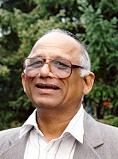 |
Anand Paranjpe
(1984/1998): Theoretical Psychology of Indian and European thought |
PhD. In India (Poona) following studies in librarianship. Began looking into Caste and Prejudice, inspired by Ambedkar the hero of the untouchables to work towards liberation.
In 1966 Erik Erikson was in India working on his book on Gandhi when he was given a paper written by Paranjpe. After seeking out the author, Erikson joined Paranjpe in hours of conversation culminating in the acceptance of a Fulbright scholarship for post-doctoral studies for Paranjpe at Harvard University.
While at Harvard, he worked with Erik Erikson as well as Professors: Stanley Milgram, Robert White, Cora DuBois, and Gordon Allport who urged Paranjpe to take a position at the new formed Simon Fraser University near Vancouver BC.
2023 Anand gave me this account of Skinner and Erikson
Professor Emeritus in Psychology and Humanities at Simon Fraser University major publication on Self and Identity and on Emotion in Indian and Western Thought.
Recently published is his book (2024) "Understanding Yoga Psychology: Indigenous psychology with global relevance" which provides a history of Yoga philosophy and psychology including the process of enlightenment (that includes the bodily postures and meditation). Review
Elsewhere scholars like Jiddu Krishnamurti and Anthony De Mello proves guides to the process of enlightenment in a more practical fashion
Richard
Shweder (1990): Cultural psychology is the psychological investigation of "forms of life" as intentional worlds imbued with meaning
There
is an emergence of interdisciplinary studies in sociology, anthropology and
psychology
Carl Ratner (1997) Cultural
psychology and the critique of logical positive models cross-cultural
psychology
Indigenous Psychologies
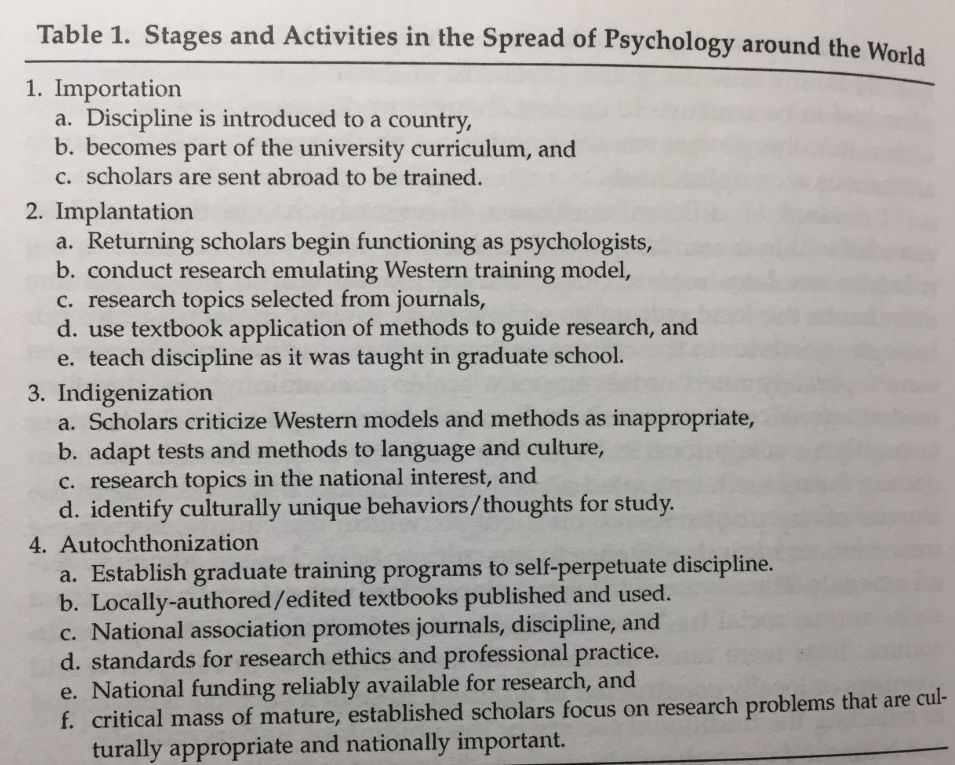
Doi ( 1971) - began to examine Japanese concept Amae in psychotherapy Heelas & Lock (1981) - Examine the self across cultural traditions Paranjpe (1984) - Draws out the traditional Indian psychology from Upanisads and Vedas Kim & Berry (1993) - Draw widespread attention in psychology towards indigenous psychologies Kim, Yang & Huang (2006) - Contributions to Indigenous and cultural psychology: Understanding people in contexts Adair (2006) - Reviews the Indigenization process from importation to autochnonization.
VIII. The future
fate of psychology? We have
examined many "forms of life" in which psychologists are actively
engaged, however, this has been a limited review of the history of psychology in
Europe and North America Multiculturalism
and social change: Unity or Diversity? From
philosophy of science are the dialectics of interpretation Neuro-Science
vs. Folk psychology Churchland's
vs Davidson Eliminative
materialism vs. Anomalistic Monism Psychology
is caught in a dialectic between natural
science and human science, Are
there revolutions or evolutions? Are
there going to be pendulum swings like Yin & Yang turning for evermore? What
about the future of the history of Psychology?
Wade Davis and his
explorations in indigenous spiritual and healing methods. Scholar in
ethno-botany, anthropology of language and geo-cultural practices, and ethno
pharmacology he has had a career as Resident
explorer at the National Geographic Society He is best known for his early
work with Voodoo in
Haiti - revealing the Zombie
Potion.
In 2009 He delivered the Massey Lectures on
Wayfinders: What ancient wisdom matters in a modern world. He has also published
on Light at the Edge of the World: A Journey through the
Realm of Vanishing Cultures . and has done two ted talks on endangered
cultures and worldwide
web of belief and ritual.
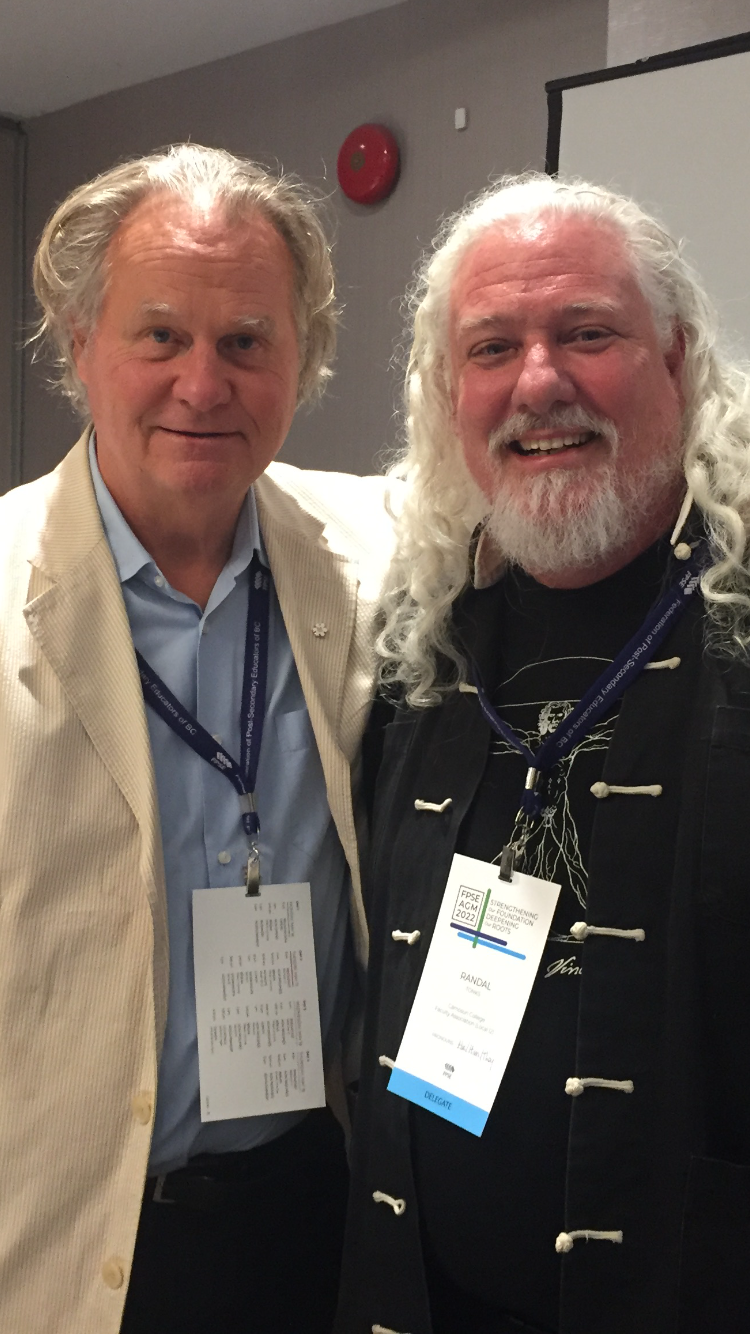 His work has had a strong impact on my own interest in indigenization of cultural psychology (psyc 288).
and fact and two perspectives on making history
(Insider & Outsider)
between the IS and the OUGHT,
between nature and morality,
between universals and particulars,
between objectivism and relativism,
between internal and external,
between scientist and practitioner